geology
The Story of Labradorite
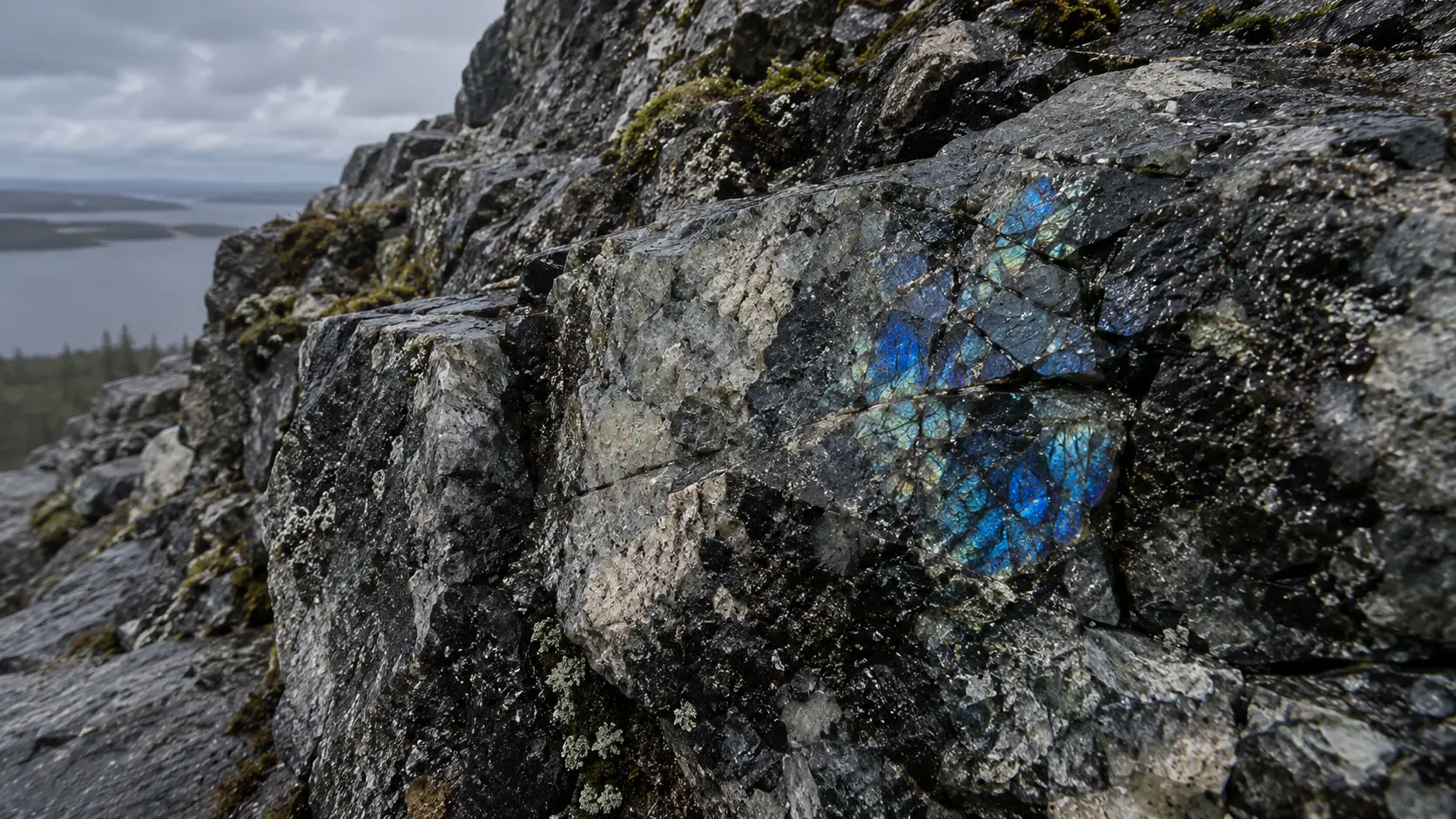
Labradorite was first described on the coast of Labrador in the eighteenth century, though it had surely been admired long before. Its defining quality has a name of its own: labradorescence, the shifting play of blue, gold, and green that appears only at certain angles.
The effect is not a surface trick. It comes from the mineral's internal structure - fine layers that scatter light into colour. Turn the stone, and the flash moves with you.
It is, in a sense, the perfect object for attention. It withholds its best quality until you look properly, and rewards you the moment you do.
We choose rough natural pieces with strong, broad flash, finishing a single presentation face so the colour moves freely across it while the rest of the stone stays as it was found.