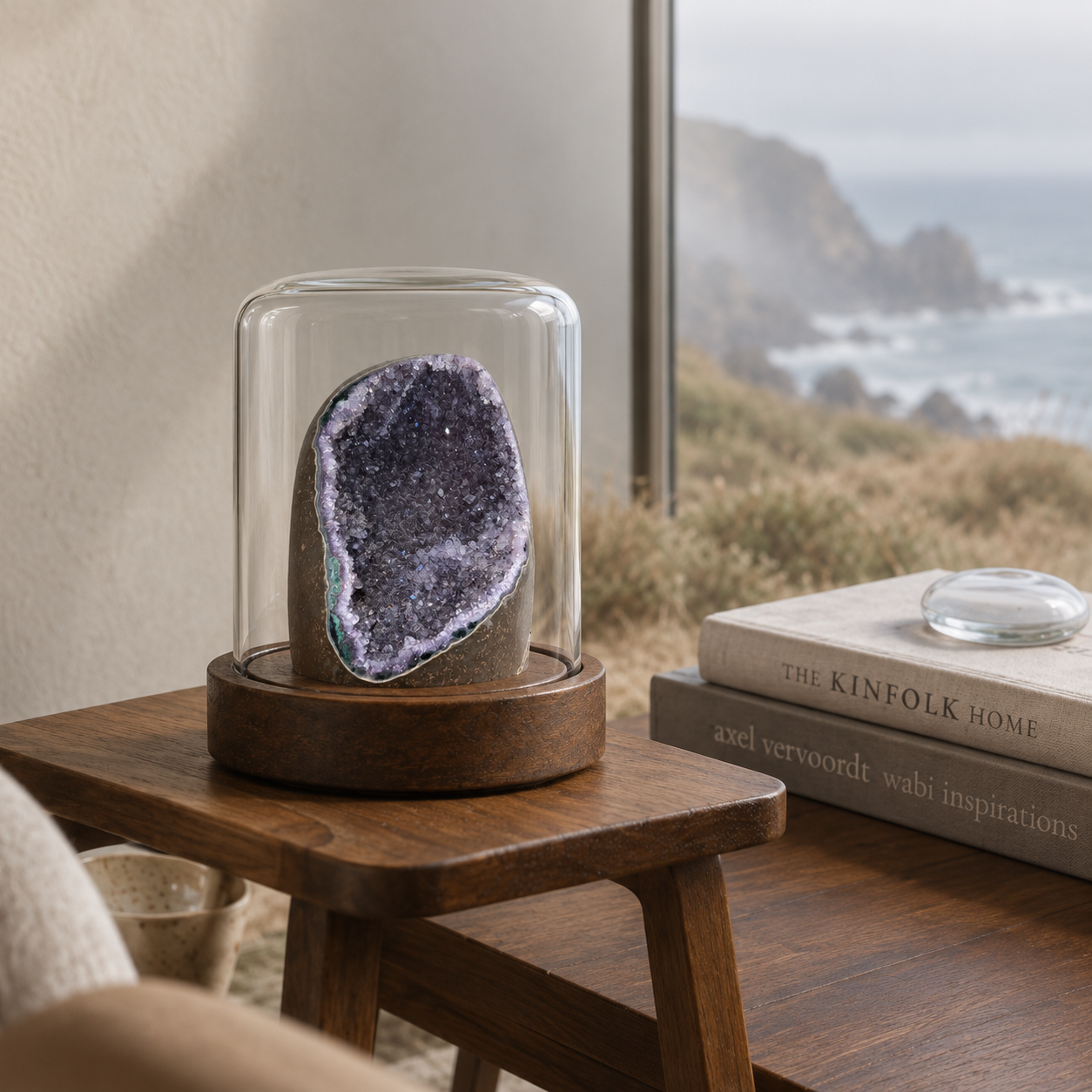
Amethyst
A violet landscape made not from one grand point, but thousands of crystals small enough to become texture.
Choose an edition
Payment is collected when you reserve.
First collection ships beginning December 2026. Most first-collection orders are expected to ship December 2026-January 2027. Cancel anytime before shipment for a full refund.
- Feeling
- Quiet
- Origin
- Uruguay
- Treatment / Finish
- Untreated
In the Home
Where it belongs
Amethyst belongs where close looking is possible: a bedside shelf, reading table, or low cabinet touched by soft side light. From across the room it reads as colour; nearby, it becomes terrain.
Formation
How it came to be
It develops inside volcanic cavities, where silica-rich fluids leave quartz across the walls and traces of iron lend the growing crystals their violet colour.
Amethyst is violet quartz. In this form, countless fine crystals cover a shared surface, creating what mineral collectors call a drusy crust.
Large points grow when a crystal has time and room to develop freely. Here, many crystals began close together across the same cavity wall, each remaining small as the surface filled.
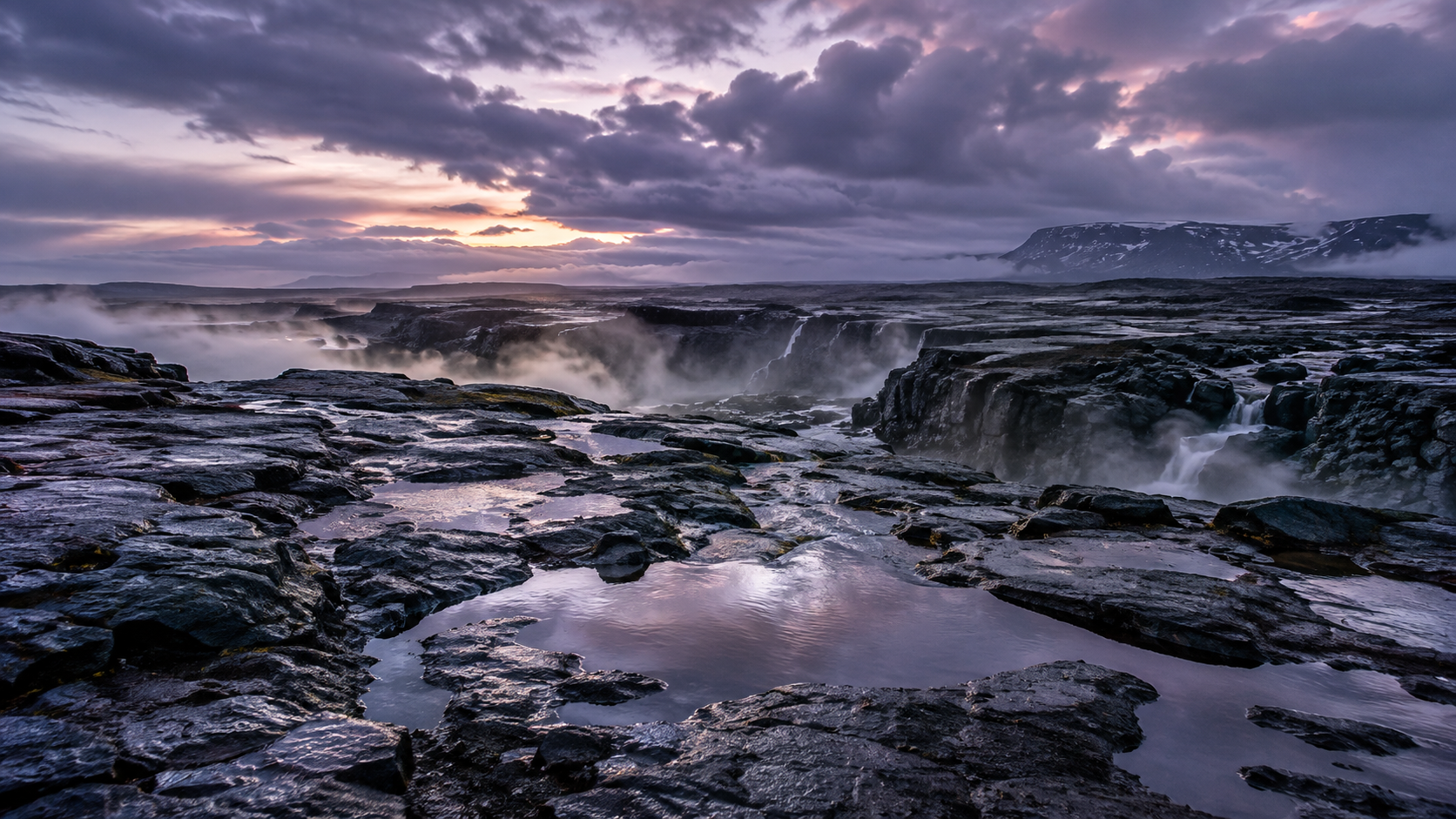
Uruguayan deposits are known for deeply coloured amethyst lining dark volcanic rock - a quiet exterior opening onto a remarkably intricate interior.
The Object
We choose dense fields of tiny, distinct points with even violet colour and a natural dark edge. The scale asks the eye to move closer before the structure fully appears.
Closer In
At close range, the surface separates into hundreds of six-sided terminations, each reflecting light independently like a landscape after frost.
Packaging
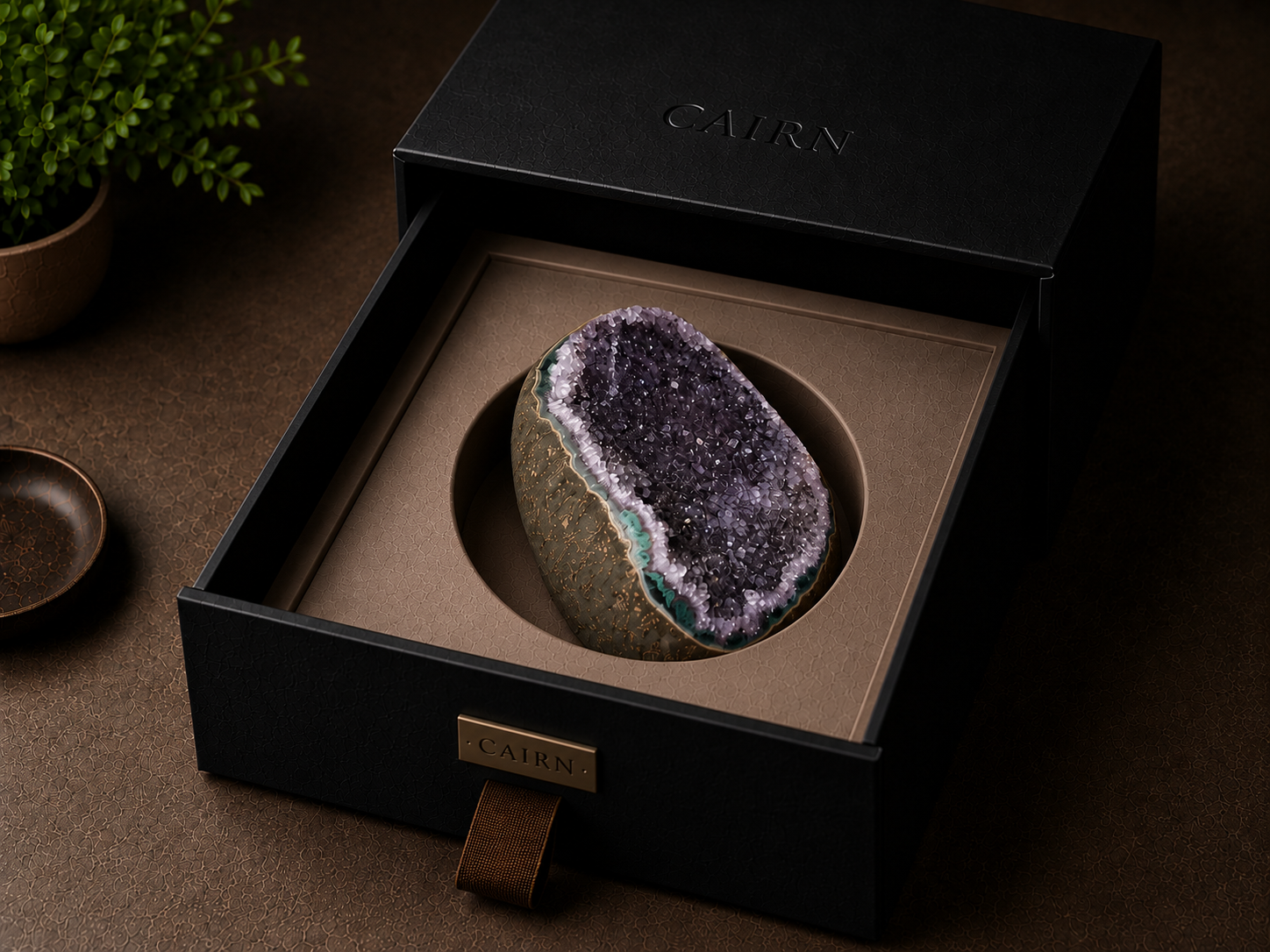
Designed to be kept, not discarded.
- Museum-inspired specimen card
- Object provenance and formation notes
- Protective presentation materials
- Designed to be kept, not discarded
You may also notice
From the Journal