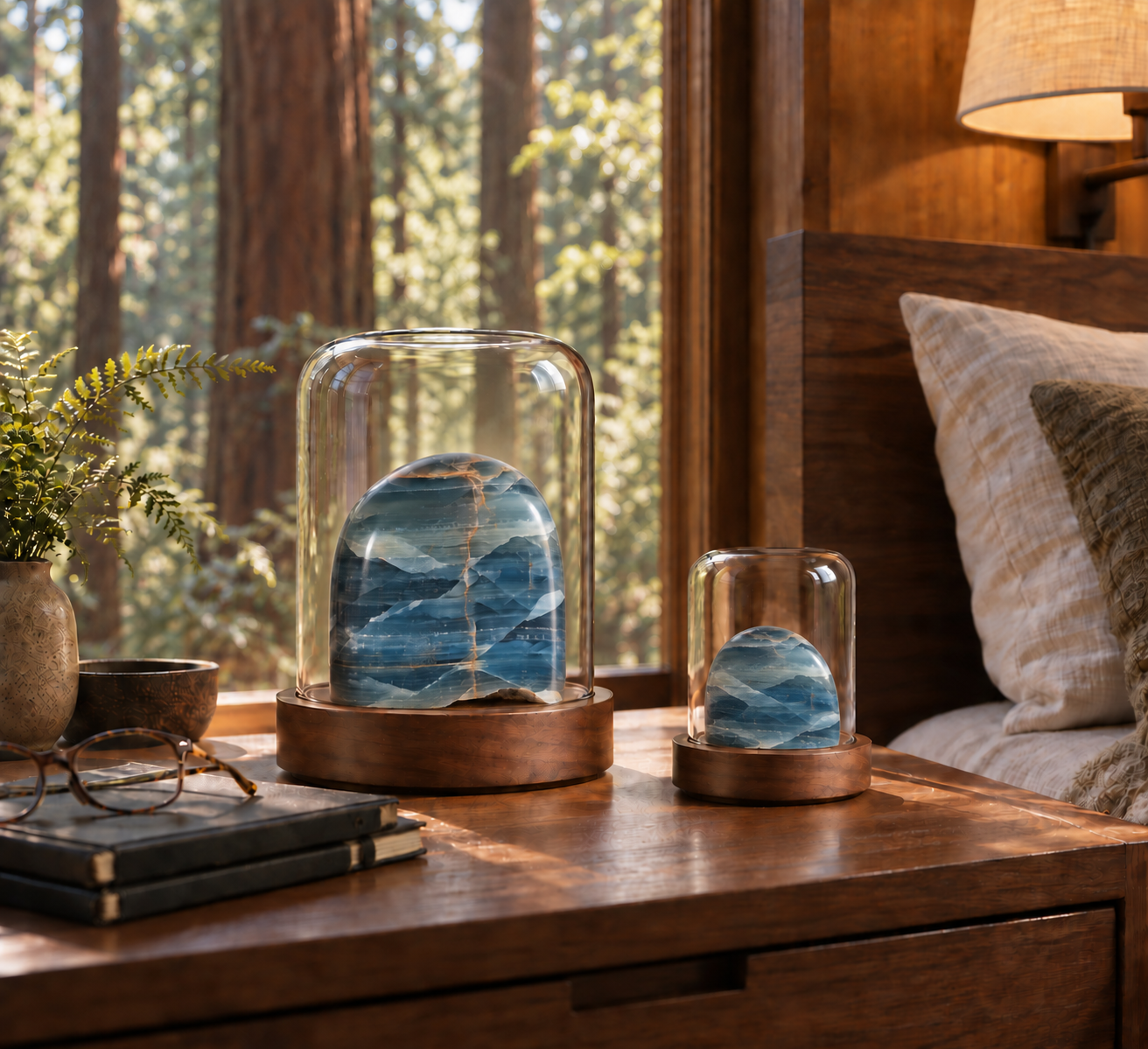
Blue Onyx
A luminous blue interior revealed through one polished face, with the rough stone still legible around it.
Choose an edition
Payment is collected when you reserve.
First collection ships beginning December 2026. Most first-collection orders are expected to ship December 2026-January 2027. Cancel anytime before shipment for a full refund.
- Feeling
- Quiet
- Origin
- Northern Argentina
- Treatment / Finish
- Untreated
In the Home
Where it belongs
Blue Onyx suits rooms built around water and reflected light - a bedroom shelf, a bath ledge kept dry, or a reading nook where its depth can be seen at close range.
Formation
How it came to be
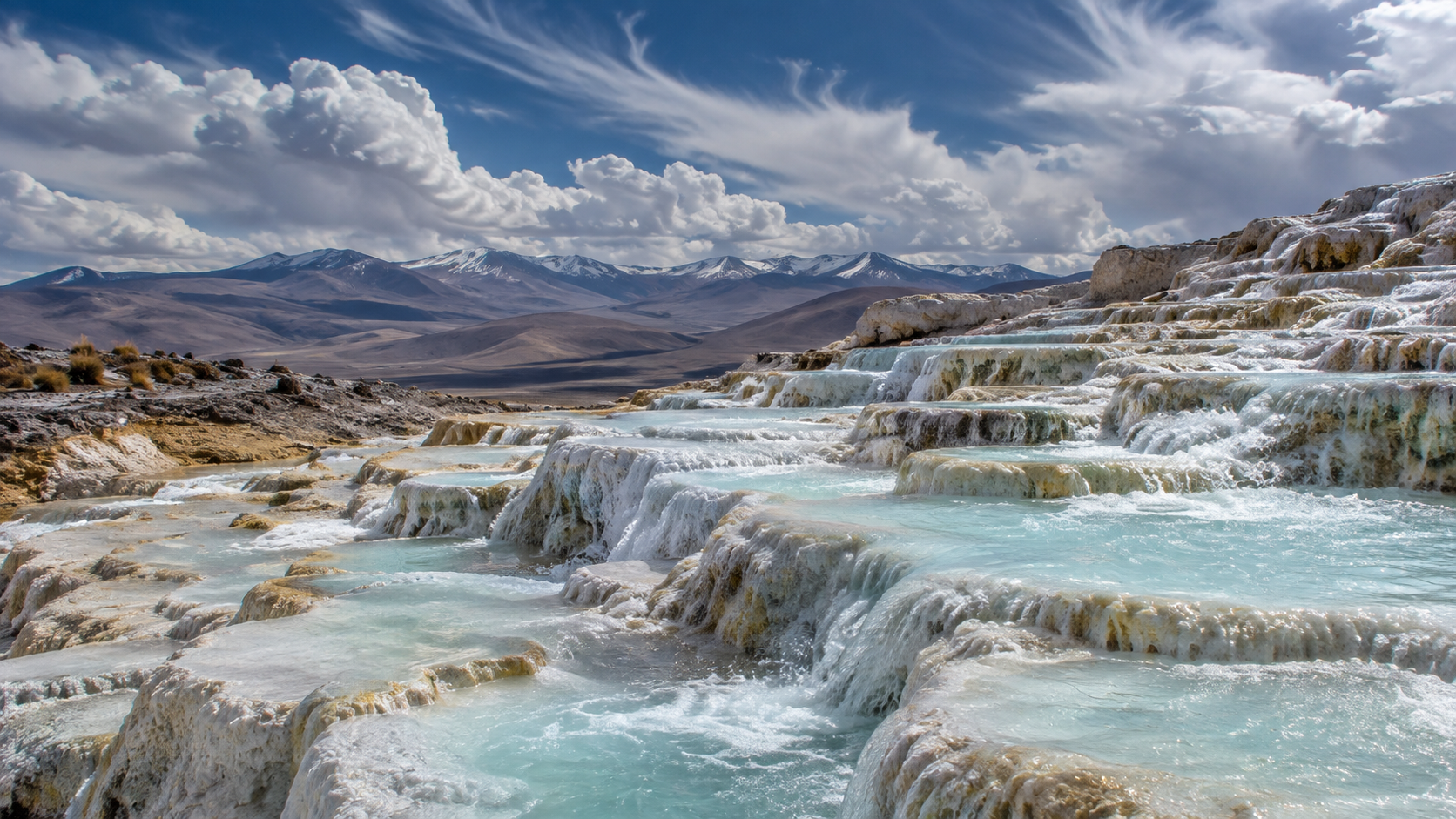
It forms as calcium-carbonate-rich water deposits successive translucent layers in cavities and fractures, building colour and banding over time.
The material commonly sold as Blue Onyx is a banded calcite rather than a true silicate onyx. Its pale blue colour and translucency come from fine mineral layers deposited one after another.
Those layers record changes in the water that fed the stone. Seen through a polished face, they appear as shifting bands, veils, and pools of colour.
The contrast matters: one face is finished to reveal the interior, while the remaining stone is left rough enough to show what surrounded it.
The Object
We select pieces with a luminous presentation face, visible internal banding, and a natural perimeter. The invitation is to look into the material, not simply at its surface.
Closer In
Close light reveals fine parallel deposits and cloudy inclusions suspended at different depths beneath the polished face.
Packaging
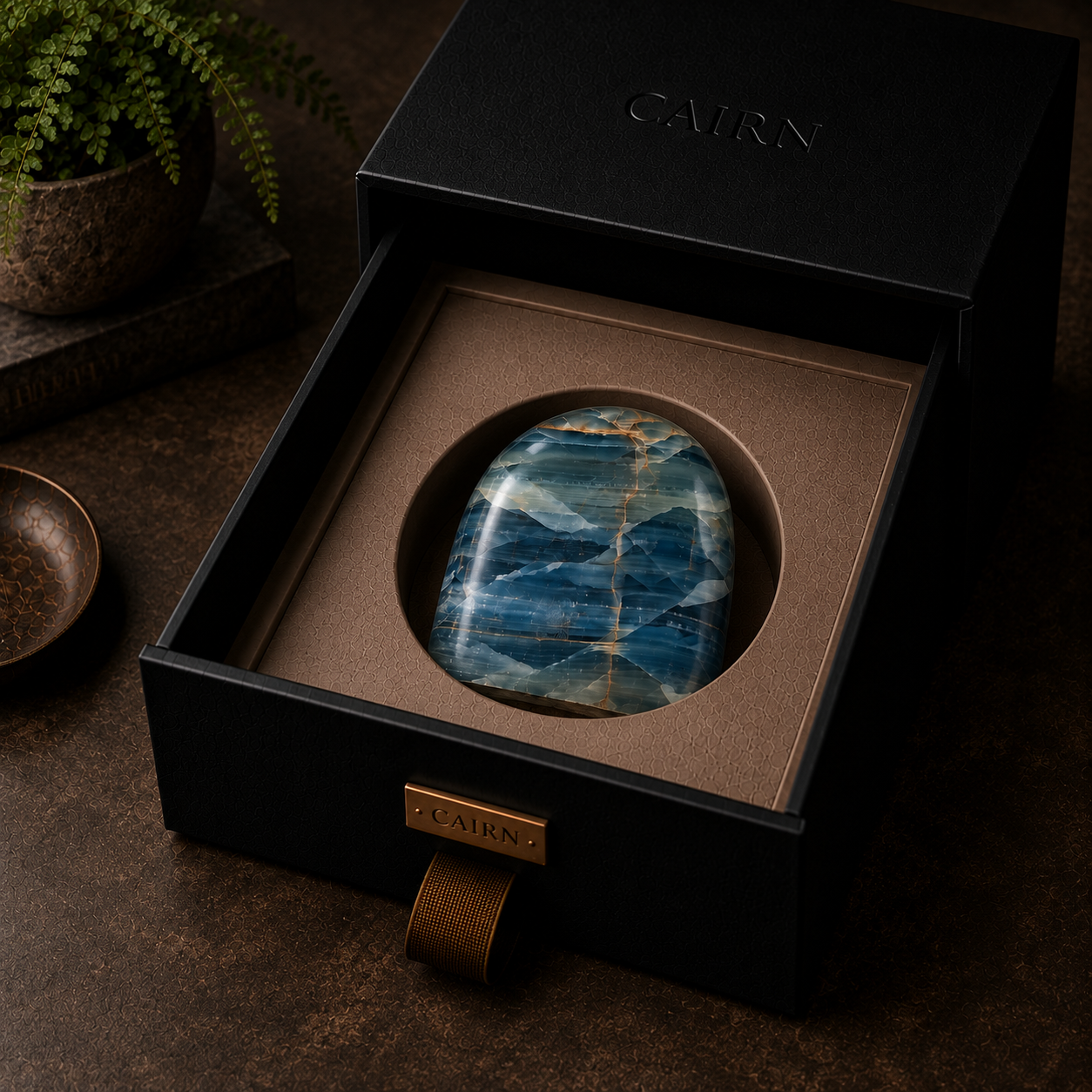
Designed to be kept, not discarded.
- Museum-inspired specimen card
- Object provenance and formation notes
- Protective presentation materials
- Designed to be kept, not discarded
You may also notice
From the Journal