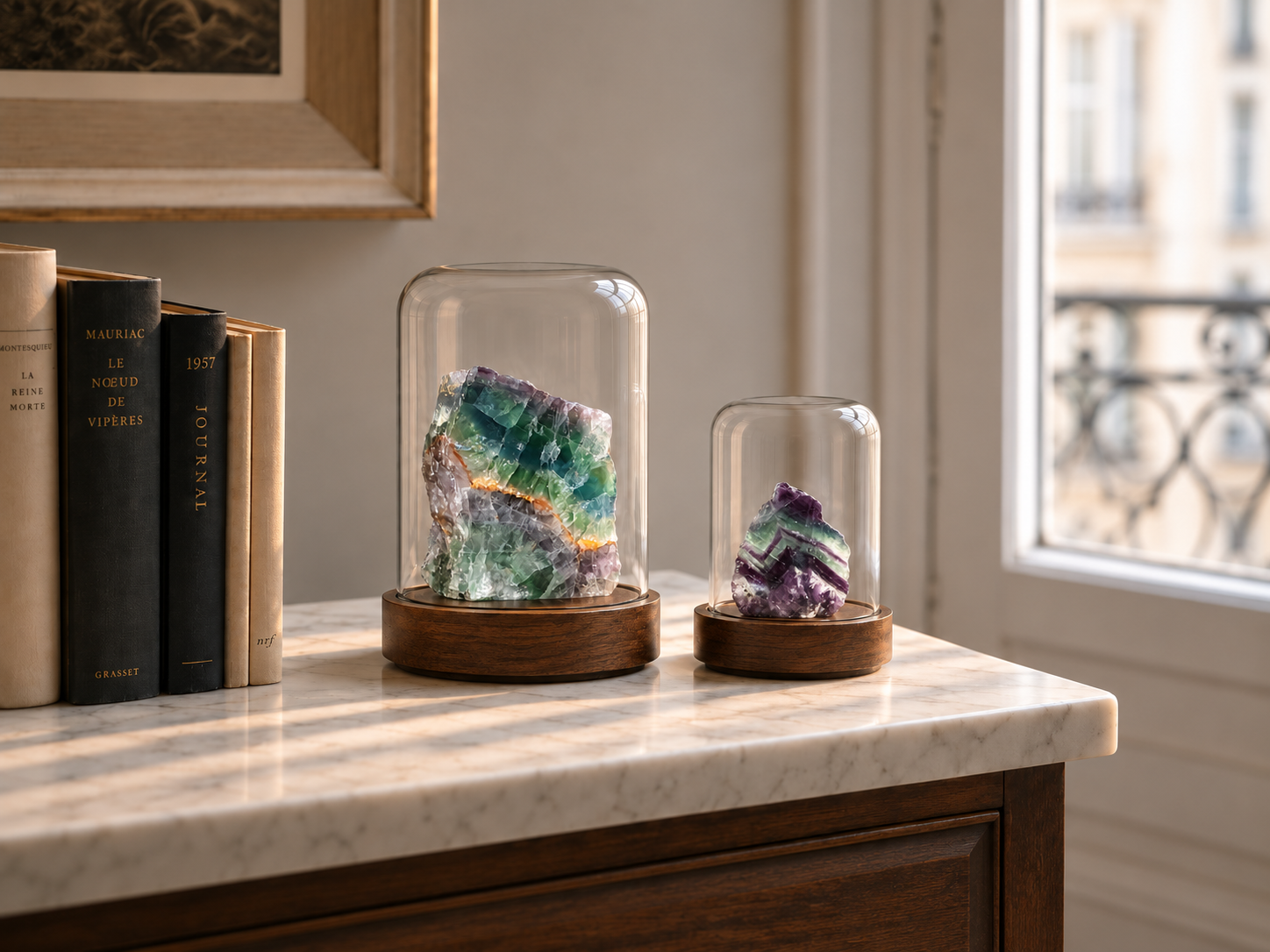
Fluorite
From aqua to lilac, banded in orderly rotation
Choose an edition
Payment is collected when you reserve.
First collection ships beginning December 2026. Most first-collection orders are expected to ship December 2026-January 2027. Cancel anytime before shipment for a full refund.
- Feeling
- Focus
- Origin
- Locality recorded with each specimen
- Treatment / Finish
- One polished presentation face; remaining surfaces natural
In the Home
Where it belongs
Fluorite is a desk companion - a mineral for the place where you think and work. Its clean geometry reads as order, and order is quietly steadying.
Formation
How it came to be
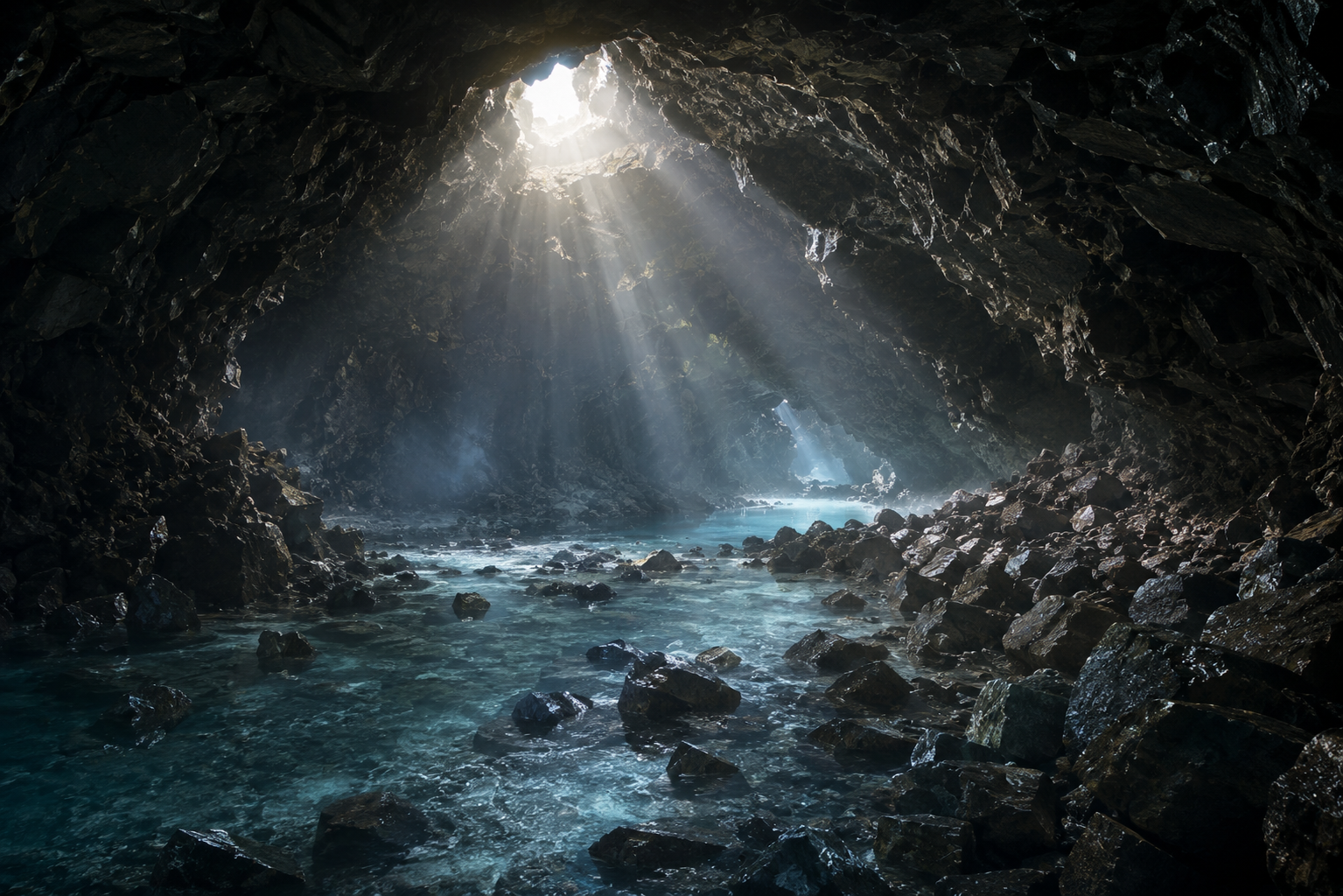
It crystallises in hydrothermal veins, precipitating from hot mineral-rich fluids moving through fractures in the surrounding rock.
Fluorite is calcium fluoride, and it crystallises naturally into cubes - one of the clearest demonstrations in nature of how atomic structure becomes visible form.
Its colour can grade within a single piece, from green and aqua through lilac and deep violet, depending on the chemistry of the fluids it grew from.
The word fluorescent comes from fluorite: many specimens glow under ultraviolet light, the phenomenon first named for this mineral.
The Object
Each specimen is a rough natural chunk of fluorite with a single polished presentation face. The face is finished to reveal colour banding and the translucency that lets light sit inside the stone; the remaining surfaces are left rough and natural.
Closer In
Under close light the polished face reveals fine internal banding, and the natural surfaces show growth steps - the record of the crystal building itself outward, one atomic layer at a time.
Packaging
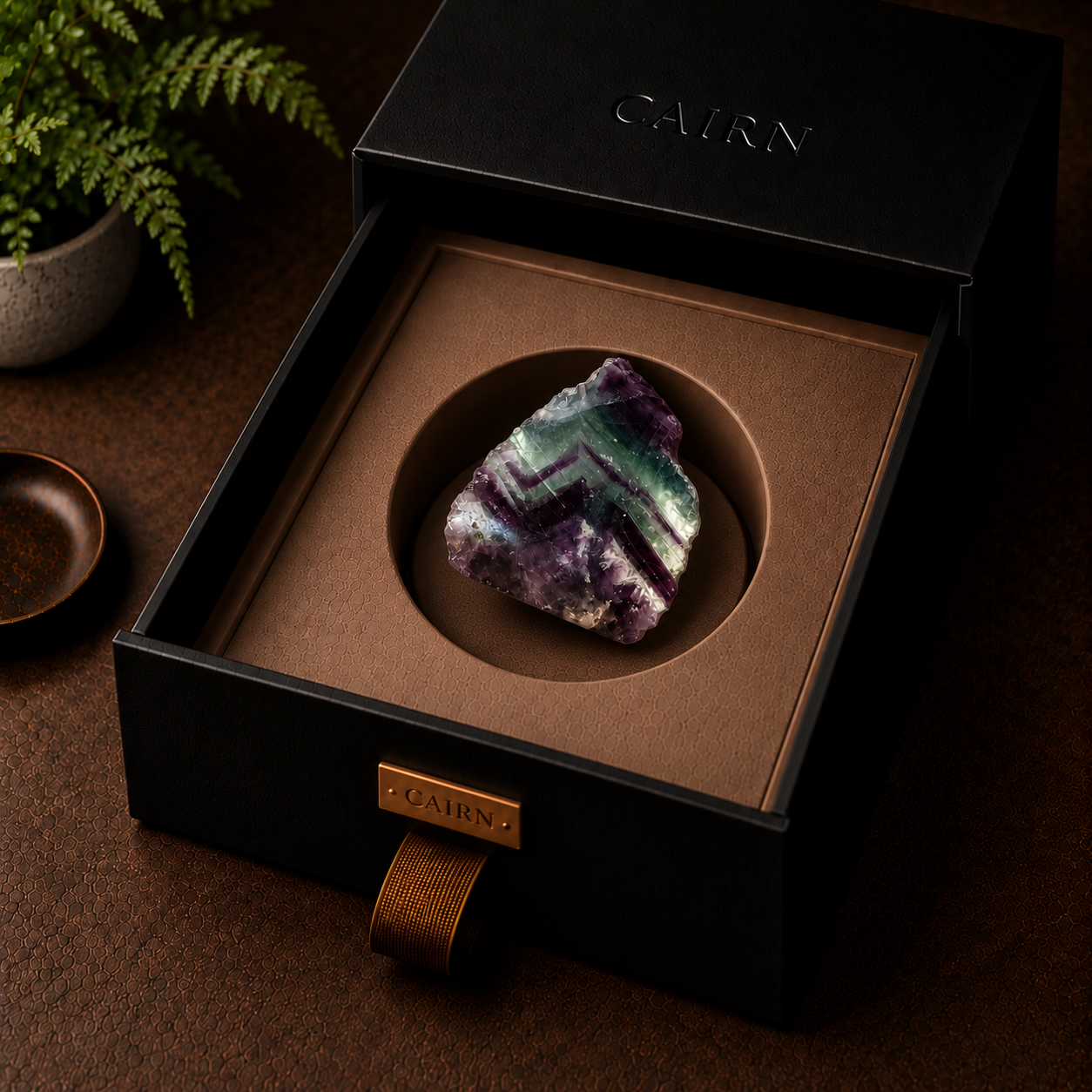
Designed to be kept, not discarded.
- Museum-inspired specimen card
- Object provenance and formation notes
- Protective presentation materials
- Designed to be kept, not discarded
You may also notice
From the Journal