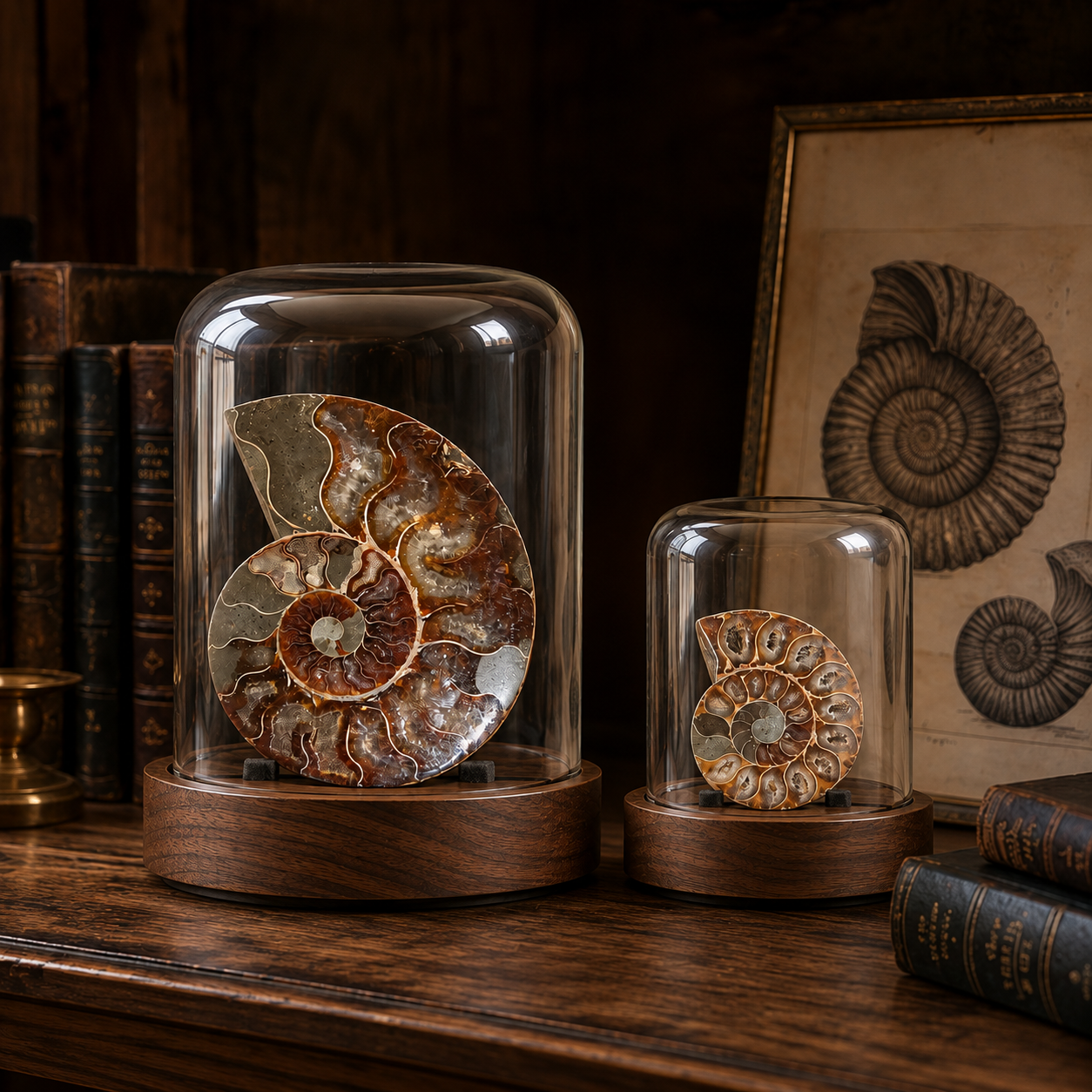
Ammonite
A perfect spiral, grown by an animal that vanished with the dinosaurs.
Choose an edition
Payment is collected when you reserve.
First collection ships beginning December 2026. Most first-collection orders are expected to ship December 2026-January 2027. Cancel anytime before shipment for a full refund.
- Feeling
- Deep Time
- Origin
- Madagascar
- Treatment / Finish
- Prepared to expose internal structure
In the Home
Where it belongs
An ammonite belongs where it can stand and be read - a desk, shelf, or console, presented upright so the spiral faces the room.
Formation
How it came to be
It forms on the sea floor, where a dead ammonite's shell is buried in sediment and slowly mineralised while keeping its coiled form.
Ammonites were marine molluscs - relatives of the modern nautilus and octopus - that thrived in the world's oceans for over 300 million years before disappearing at the end of the Cretaceous.
The fossil beds of Madagascar are a major source of well-preserved ammonites, often mineralised with calcite or aragonite that reveals their internal chambers.
The shell grew in a logarithmic spiral, adding chambers as the animal grew - a mathematical form built by biology.
The Object
Each specimen is a fossil ammonite prepared so its internal structure is exposed - chambers, suture lines, and crystallisation legible across the face. It is presented upright, held so the spiral reads at a glance.
Closer In
Under magnification the suture lines reveal a complexity that helped these animals strengthen their shells against pressure.
Packaging
Designed to be kept, not discarded.
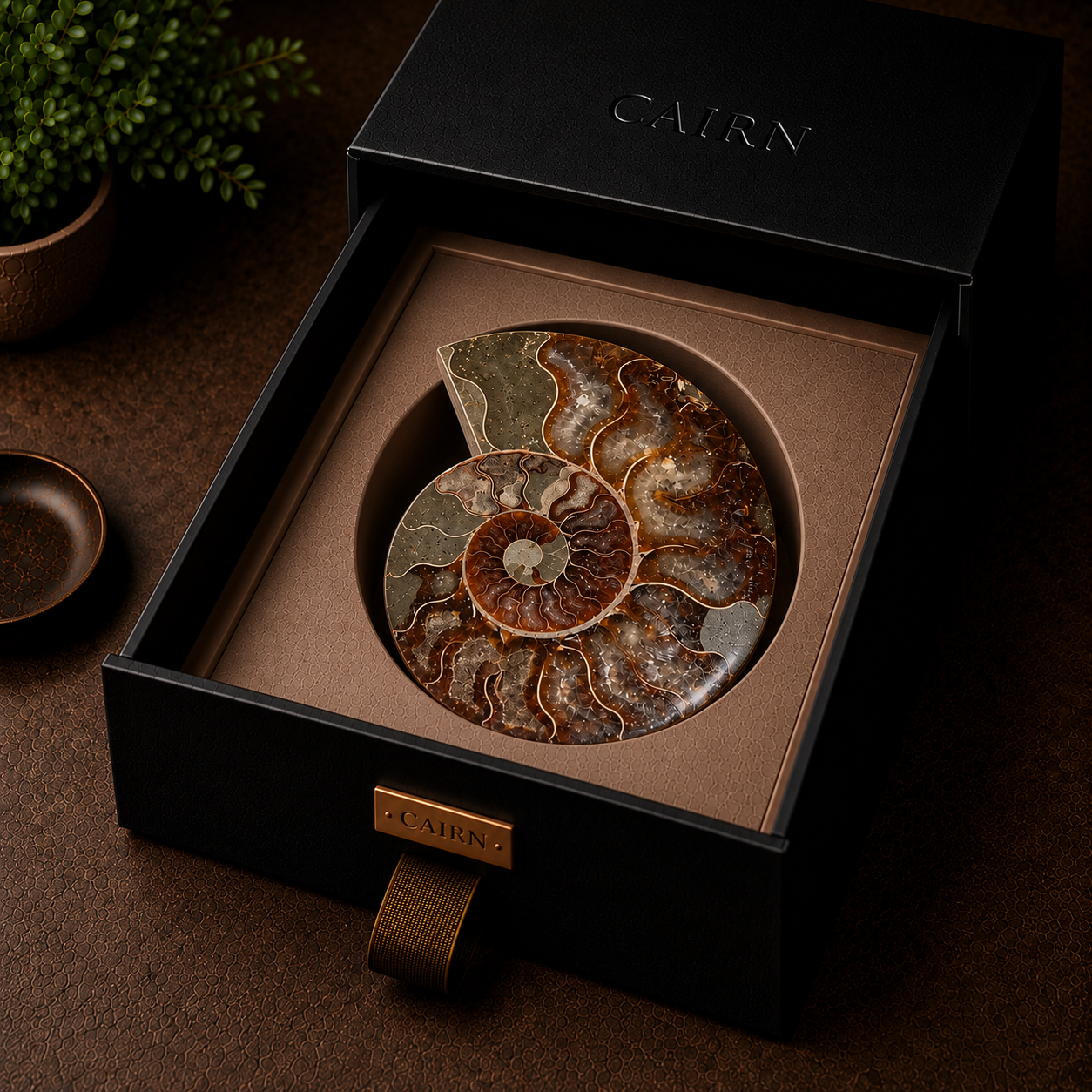
- Museum-inspired specimen card
- Object provenance and formation notes
- Protective presentation materials
- Designed to be kept, not discarded
You may also notice
From the Journal