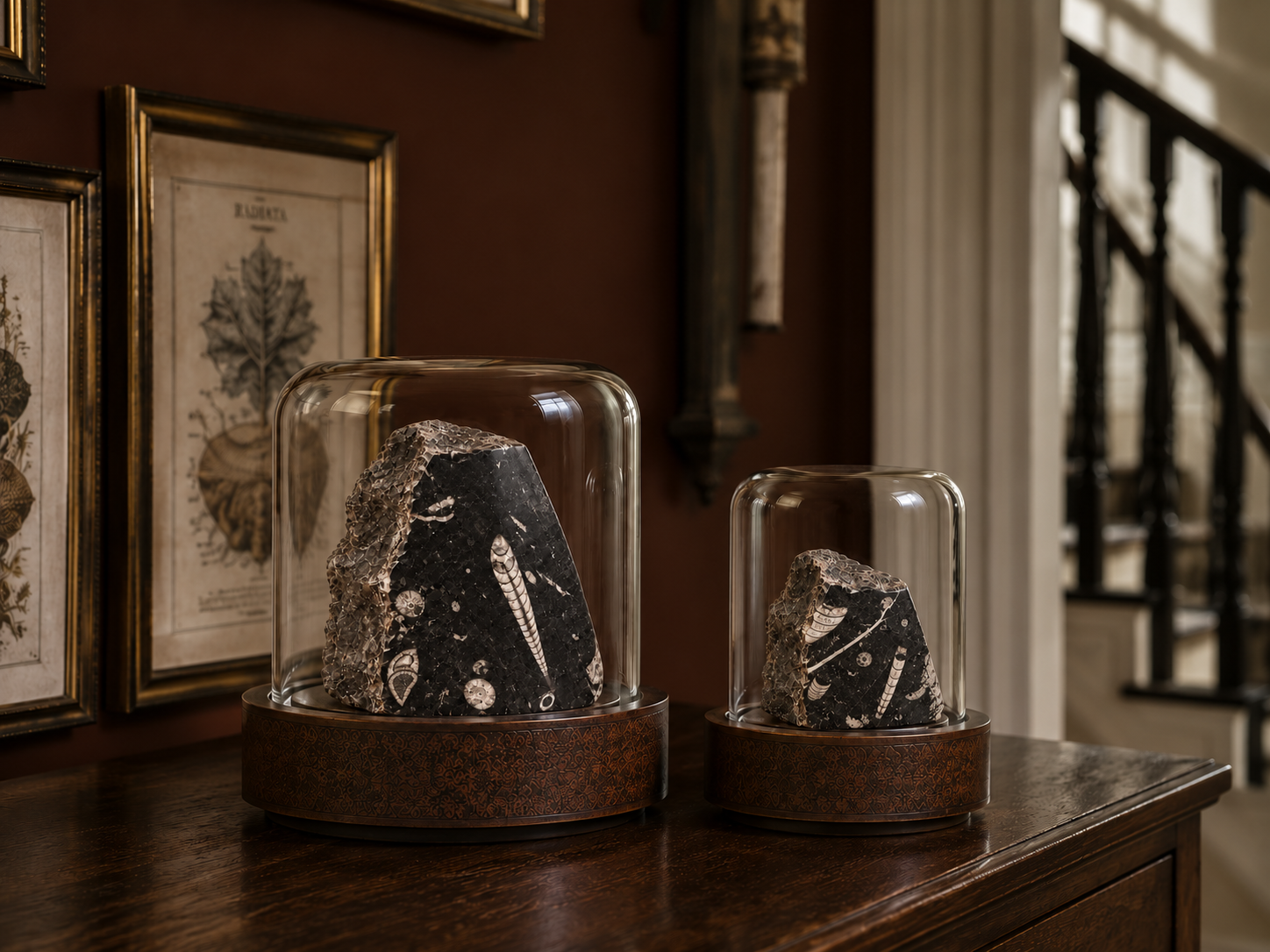
Fossil-bearing Limestone
An ancient sea floor in deep gray stone, its shelled creatures held mid-motion.
Choose an edition
Payment is collected when you reserve.
First collection ships beginning December 2026. Most first-collection orders are expected to ship December 2026-January 2027. Cancel anytime before shipment for a full refund.
- Feeling
- Deep Time
- Origin
- Morocco
- Treatment / Finish
- One polished presentation face; remaining surfaces natural
In the Home
Where it belongs
This is an object to live beside slowly - resting on a console or broad shelf, catching raking light that brings its fossils into relief.
Formation
How it came to be
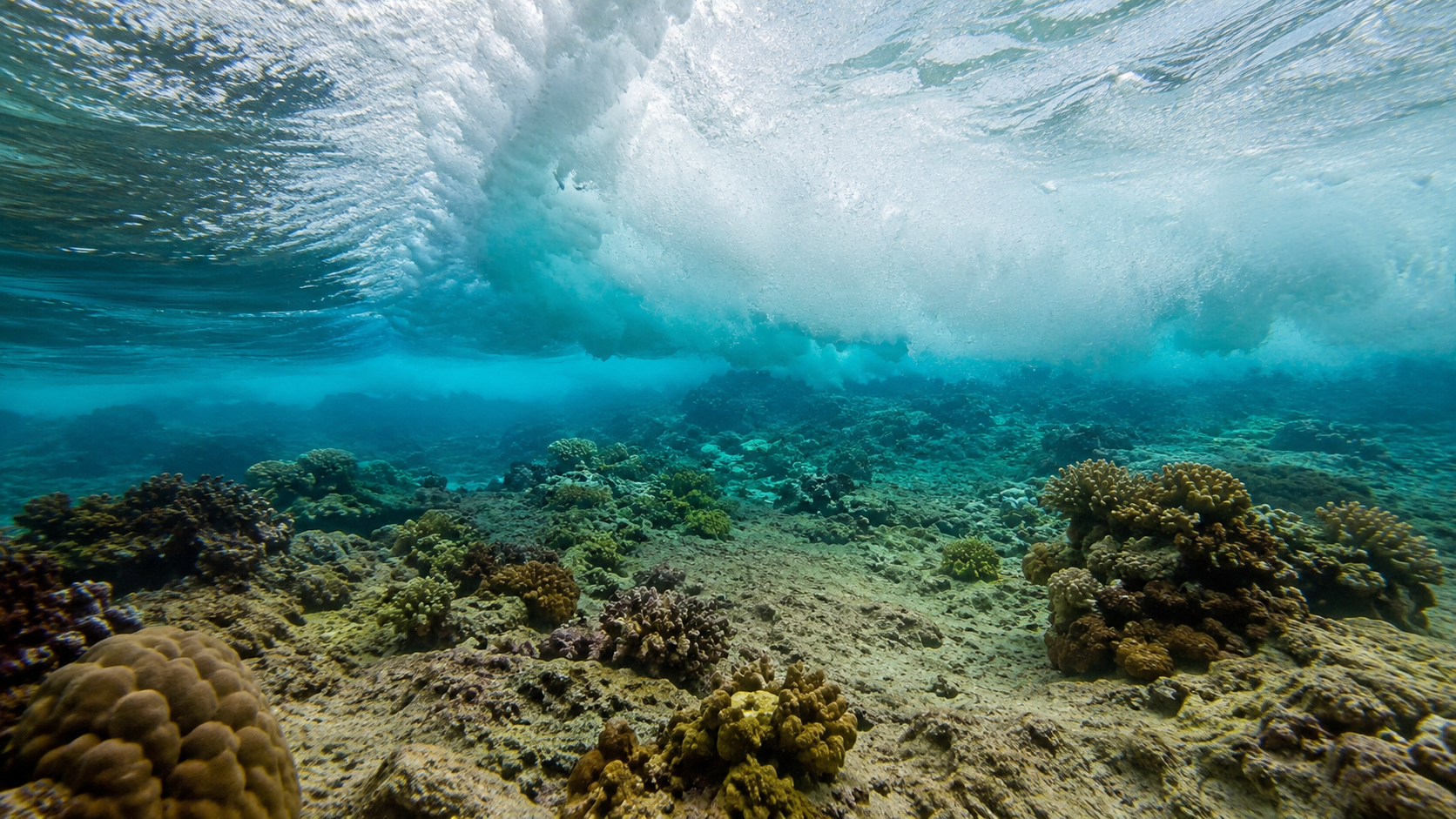
It forms on the beds of warm, shallow seas, where the shells and skeletons of marine life accumulate and compact into stone over millions of years.
Limestone is made largely of calcium carbonate, much of it biological in origin - the compressed remains of shelled sea creatures.
The fossil beds of Morocco preserve ammonites, orthoceras, and other marine life from the Devonian and later periods, hundreds of millions of years old.
Each fossil marks a single life; the stone as a whole records an entire vanished sea floor.
The Object
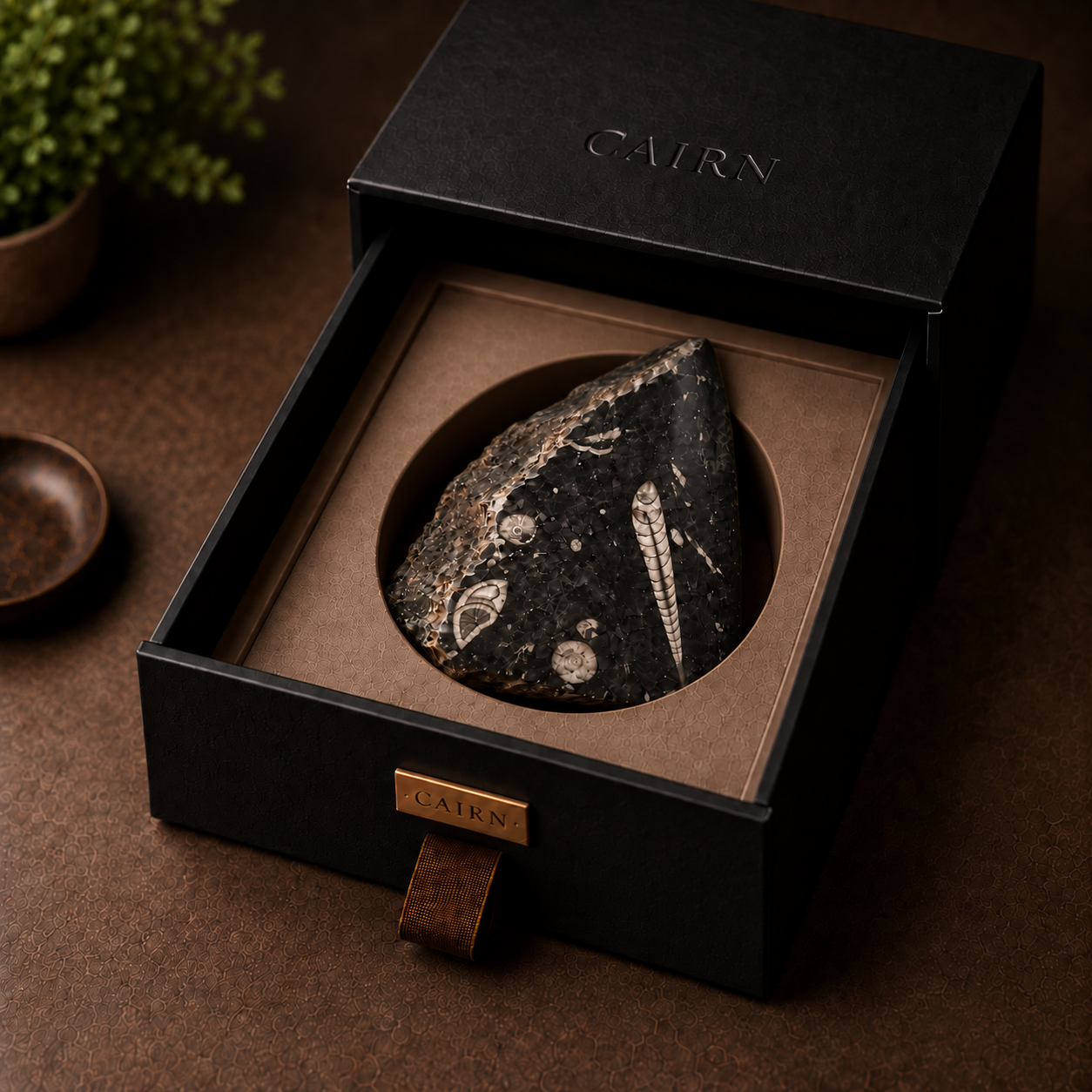
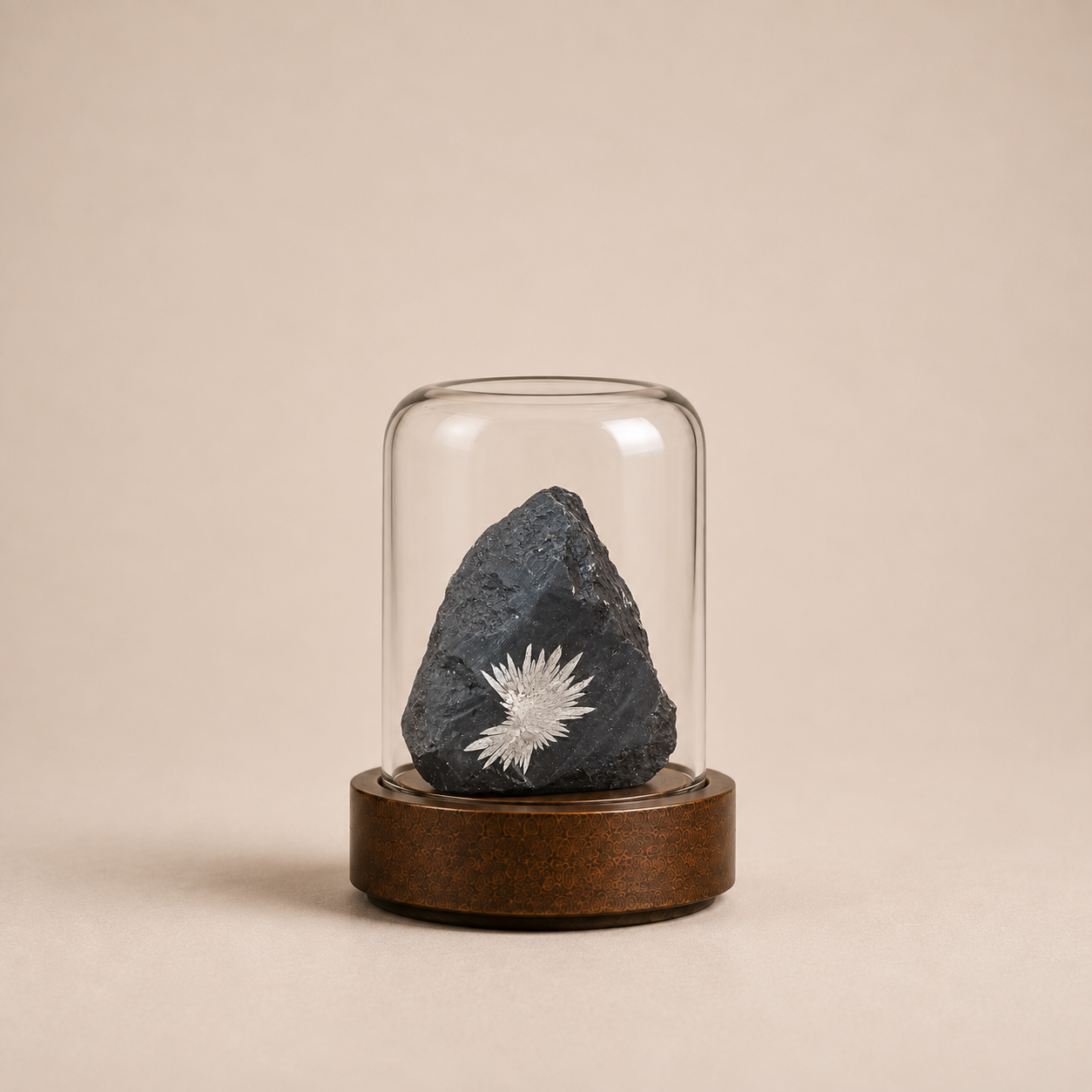
Each specimen is a rough dimensional block of fossil-bearing limestone with one polished presentation face. The face is finished so the fossil material lifts clearly out of the surrounding matrix; the remaining surfaces are left rough and natural.
Closer In
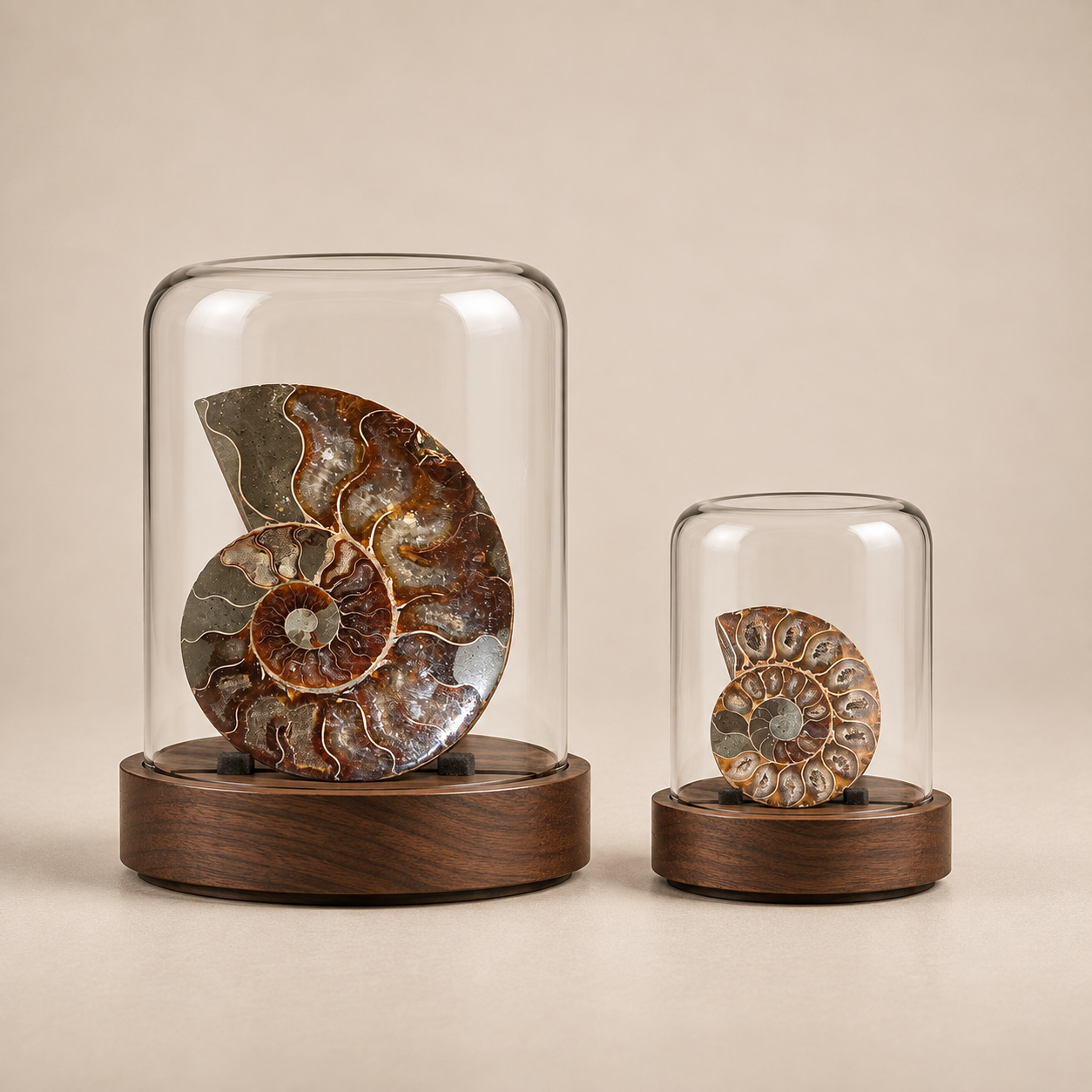
Closer in, chambered interiors resolve into fine spirals - the growth record of a single animal, sealed in stone.
Packaging
Designed to be kept, not discarded.
- Museum-inspired specimen card
- Object provenance and formation notes
- Protective presentation materials
- Designed to be kept, not discarded
You may also notice
From the Journal