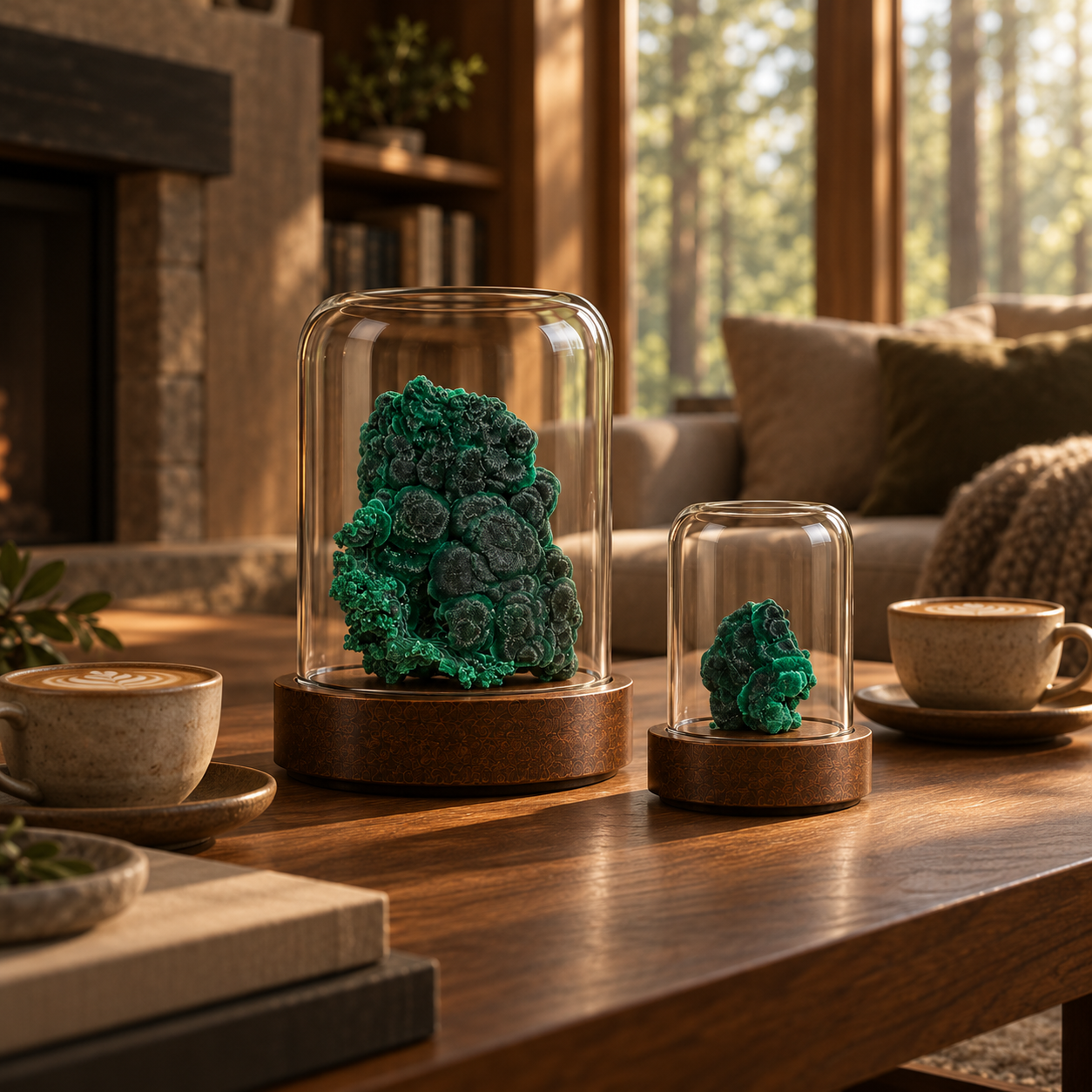
Malachite
Saturated green gathers in bands and rounded growths so intricate they seem drawn rather than formed.
Choose an edition
Payment is collected when you reserve.
First collection ships beginning December 2026. Most first-collection orders are expected to ship December 2026-January 2027. Cancel anytime before shipment for a full refund.
- Feeling
- Wonder
- Origin
- Democratic Republic of the Congo
- Treatment / Finish
- Untreated
In the Home
Where it belongs
Malachite holds its own in a living room or entryway, where walnut, stone, and natural light give its extraordinary green a quiet architectural frame.
Formation
How it came to be
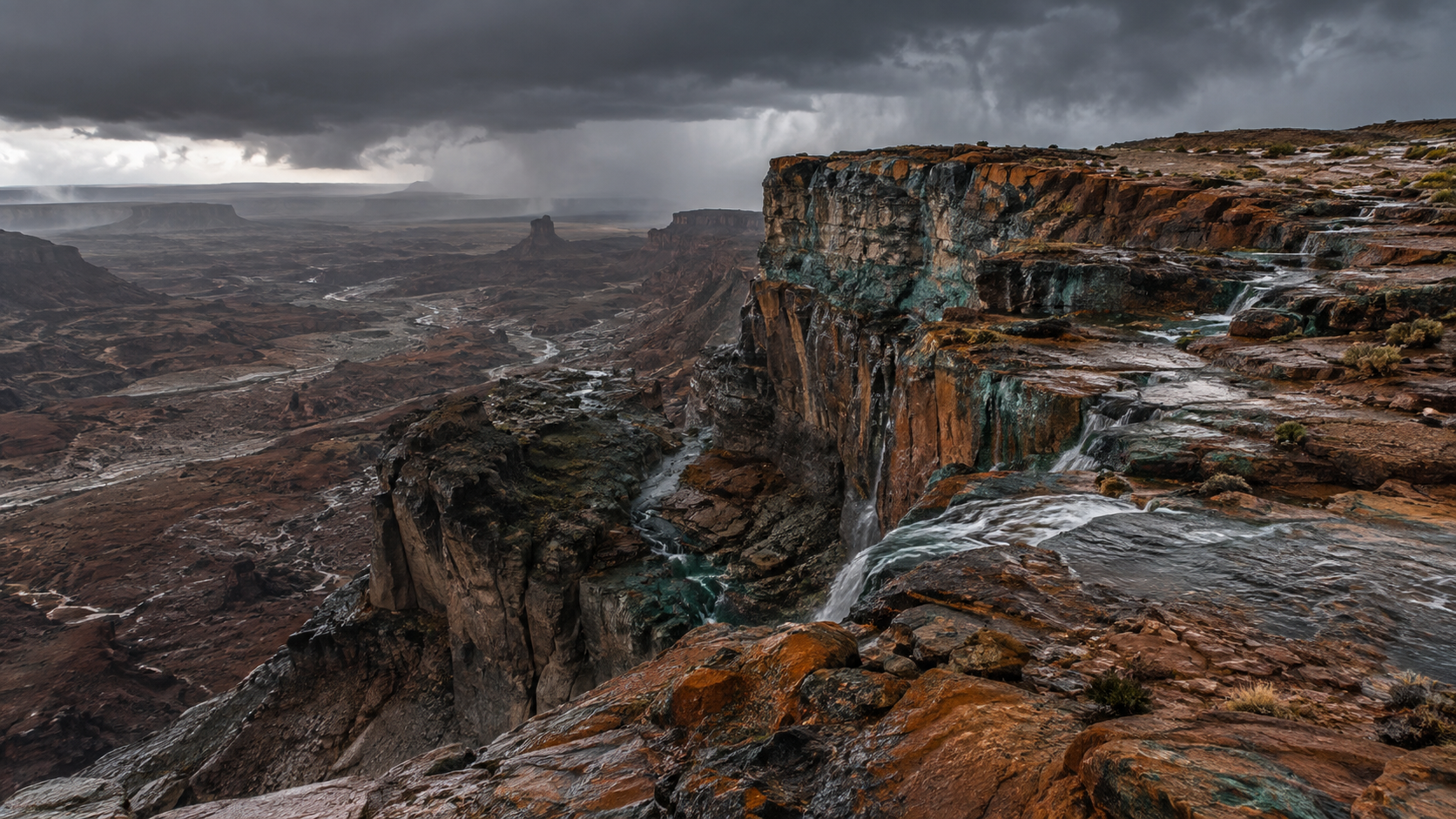
It forms in the weathered upper zones of copper deposits, where copper-bearing waters react with carbonate-rich rock and build new mineral structures.
Malachite is a copper carbonate mineral, coloured by copper itself. It often grows in rounded, botryoidal surfaces - a cluster of forms whose name comes from their resemblance to grapes.
Layer by layer, changing conditions produce bands and internal architectures ranging from rings to sweeping lines, visible across the natural surface of the stone.
Its colour and pattern can look manufactured. The wonder is that both are entirely geological.
The Object
Each specimen is untreated raw malachite, selected for its natural botryoidal surface - the rounded, grape-like growths that form as the mineral builds outward. Nothing is polished, coated, or reshaped; the hand of the Earth is the only one at work.
Closer In
Closer in, the green resolves into fine concentric layers, each marking another stage of mineral deposition.
Care & Stewardship
Handle gently and wash hands afterward. Keep the specimen dry and intact; do not grind, sand, drill, or otherwise create mineral dust.
Packaging
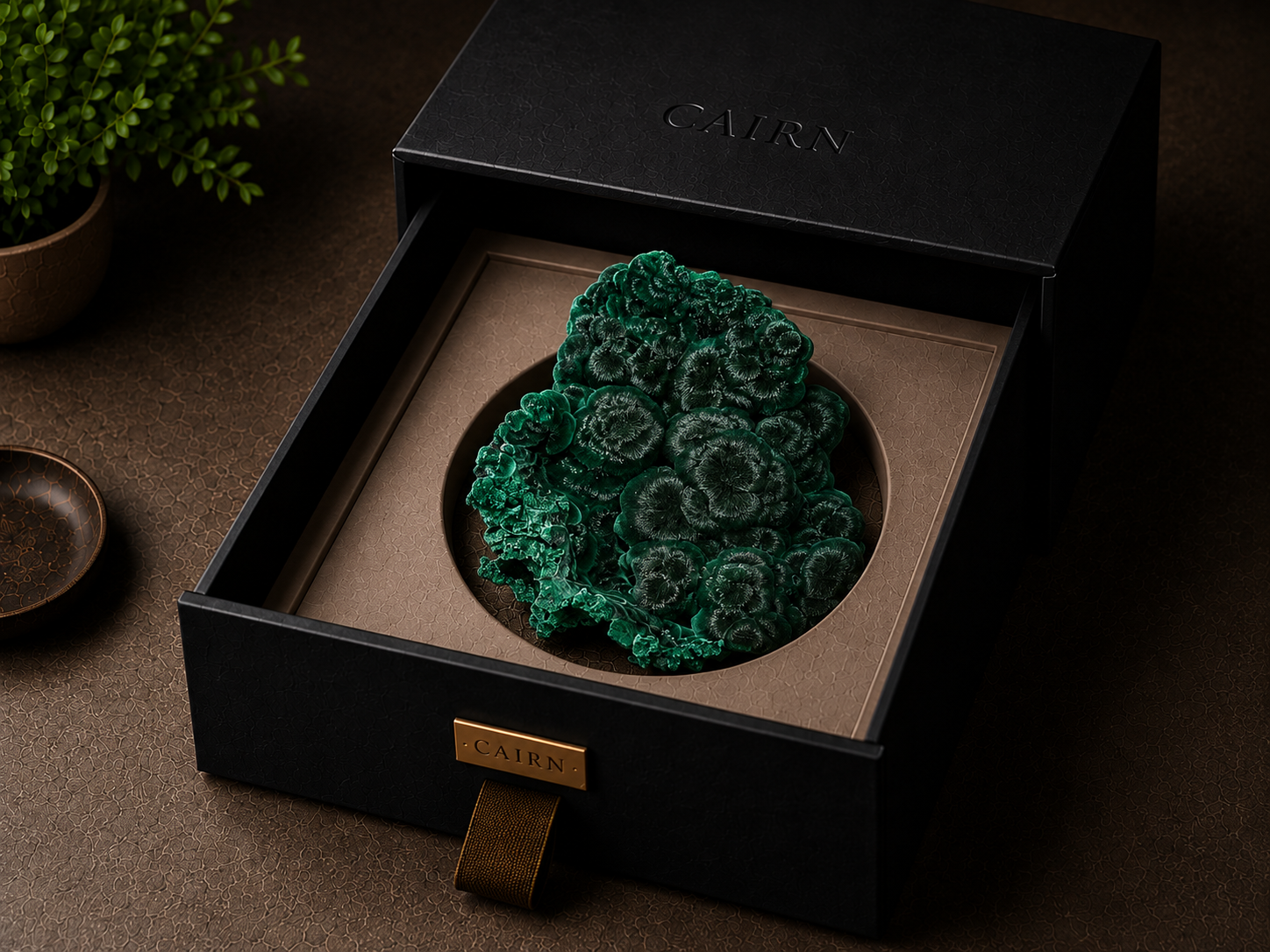
Designed to be kept, not discarded.
- Museum-inspired specimen card
- Object provenance and formation notes
- Protective presentation materials
- Designed to be kept, not discarded
You may also notice
From the Journal