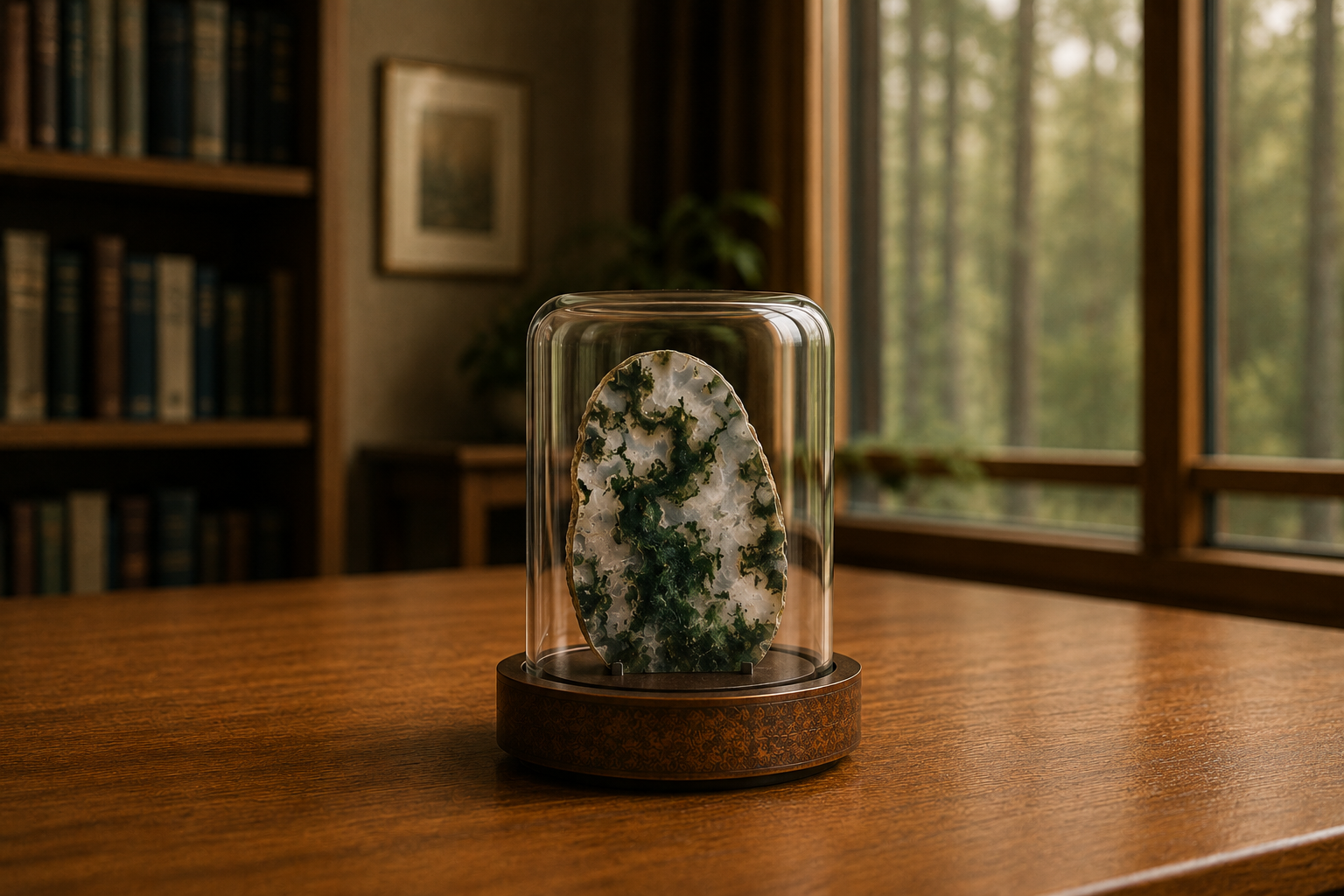
Moss Agate
A forest pressed into stone — green threads suspended in still, translucent grey.
Choose an edition
Reserve now — joins the waitlist for our first collection.
- Feeling
- Quiet
- Origin
- Maharashtra, India
- Treatment
- Cut and polished
In the Home
Where it belongs
Moss agate suits the quietest rooms — a bedside table, a bathroom shelf, a windowsill where morning light passes through it. It is a stone for slow attention rather than display.
Formation
How it came to be
It forms in gas cavities within ancient basalt lava flows, where silica-rich water carries dissolved iron and manganese into the stone.
Despite its name, moss agate contains no moss. The fern-like green inclusions are dendrites — mineral growths of iron and manganese oxide that crystallised inside the silica as it hardened.
The great basalt provinces of Maharashtra, India, are among the most reliable sources of clear-bodied moss agate with well-defined green dendrites.
Each piece is unique: no two dendritic patterns are ever the same, because each grew along the accidents of its own cavity.

The Object
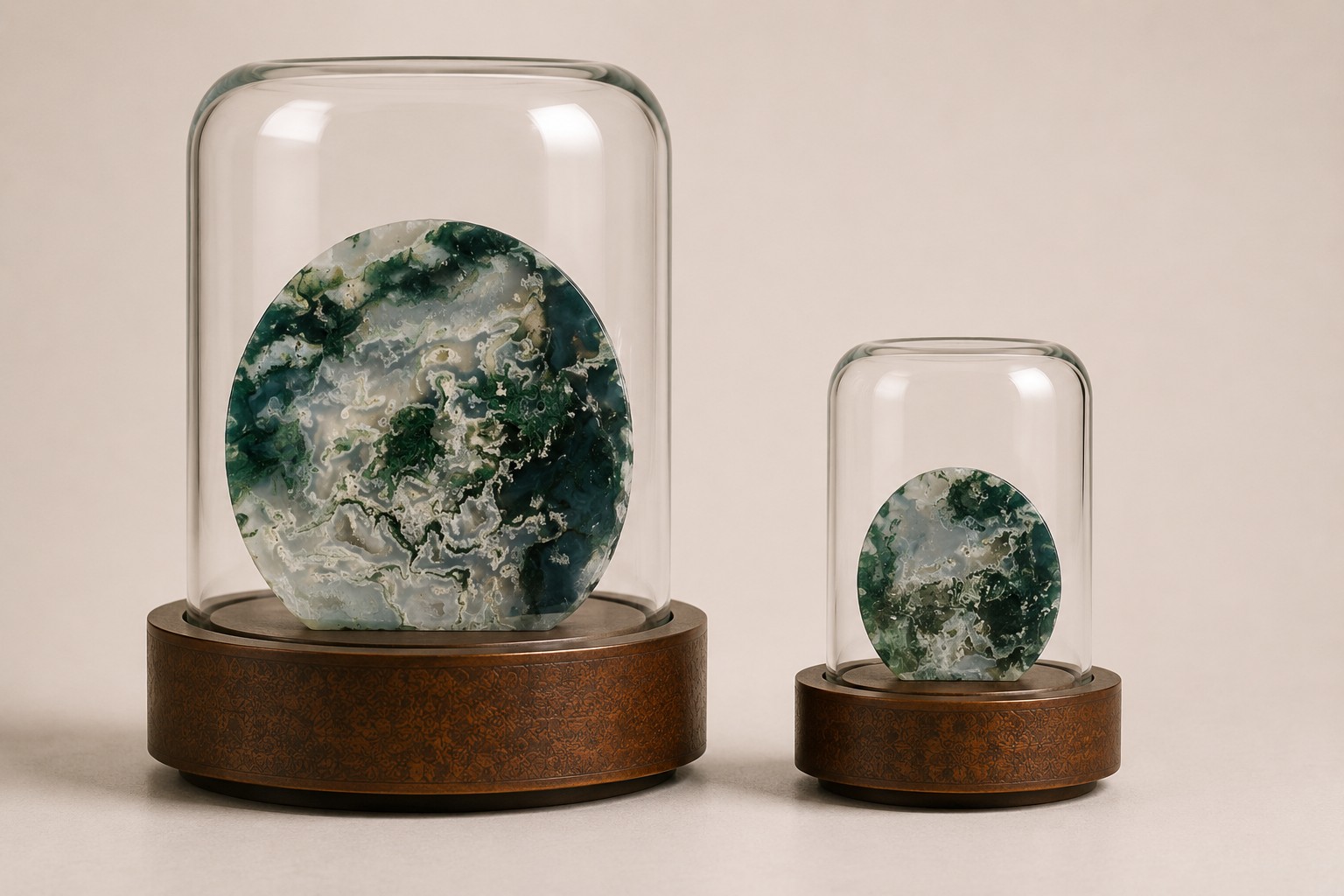
We cut and polish slabs that hold their dendrites in clear, translucent stone, so the green appears to float. Vertical pieces are chosen for how light passes through them when they stand.
Closer In
Under magnification the dendrites branch like frost on a window — self-similar at every scale, a landscape that only grows more detailed the closer you look.
Packaging
Designed to be kept, not discarded.
- Museum-inspired specimen card
- Object provenance and formation notes
- Protective presentation materials
- Designed to be kept, not discarded
You may also notice
From the Journal