In the Home
Where it belongs
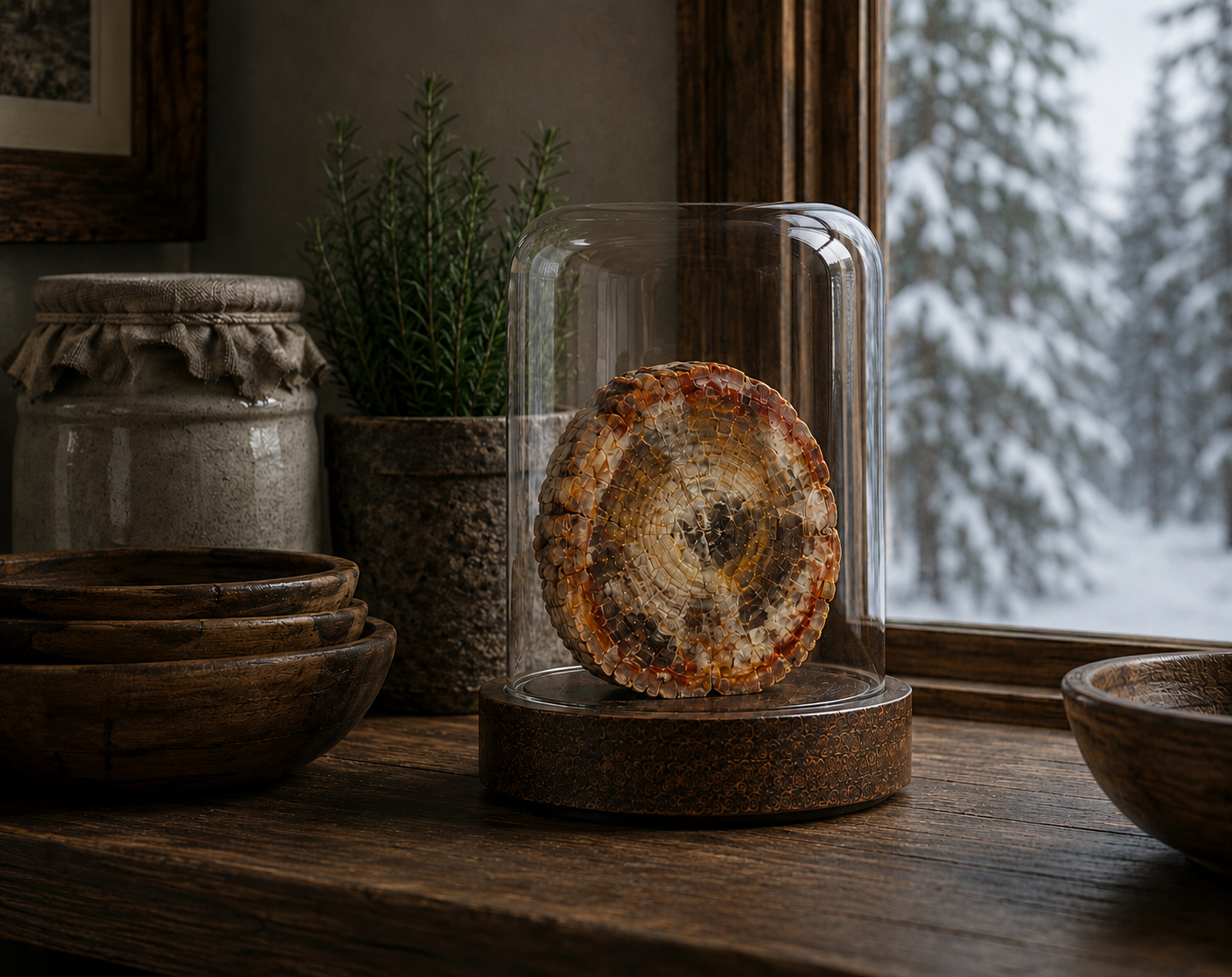
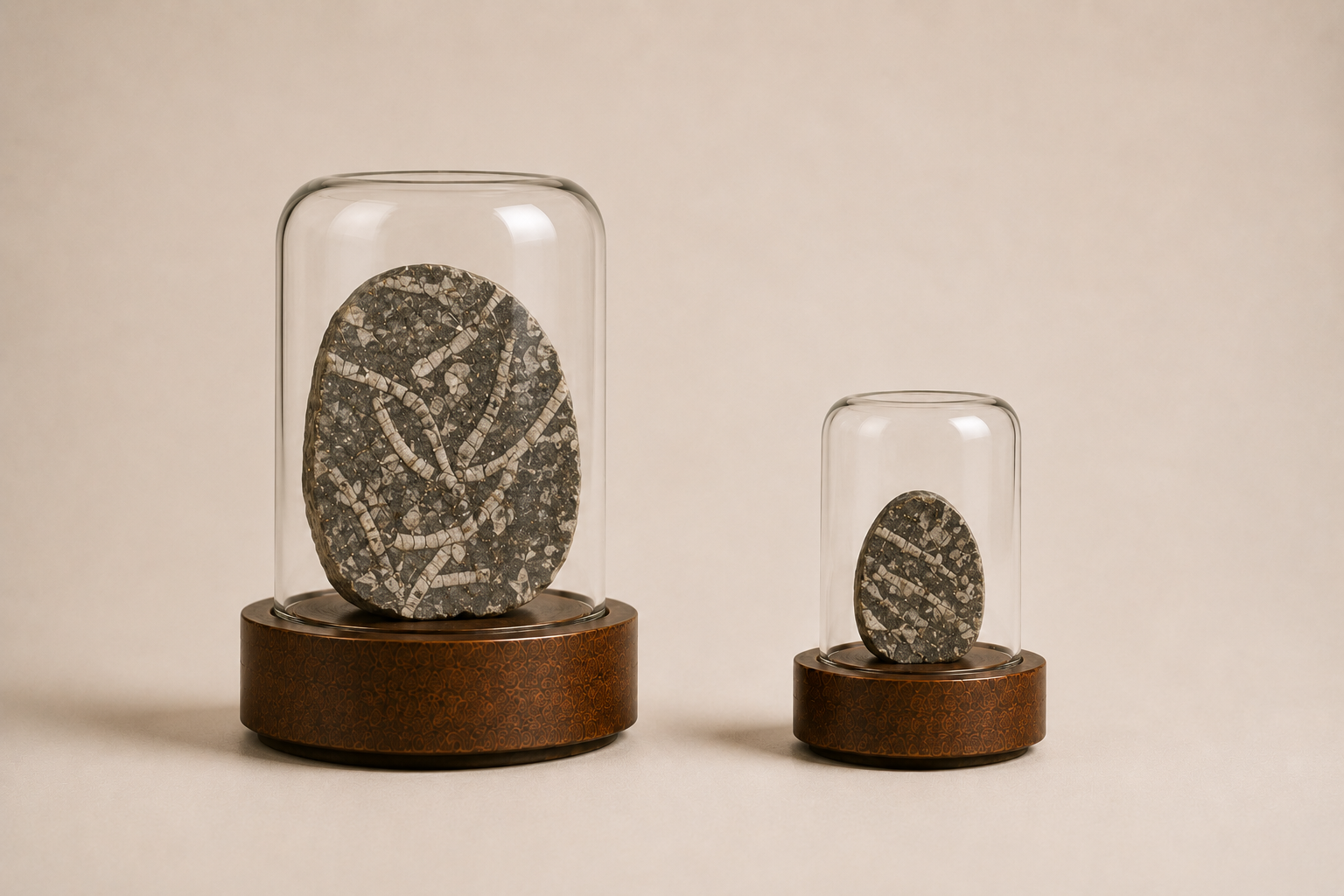
Petrified wood belongs where it can be met at eye level — a console, a shelf, a mantel. Standing upright, its rings read like a face you can return to.
Formation
How it came to be
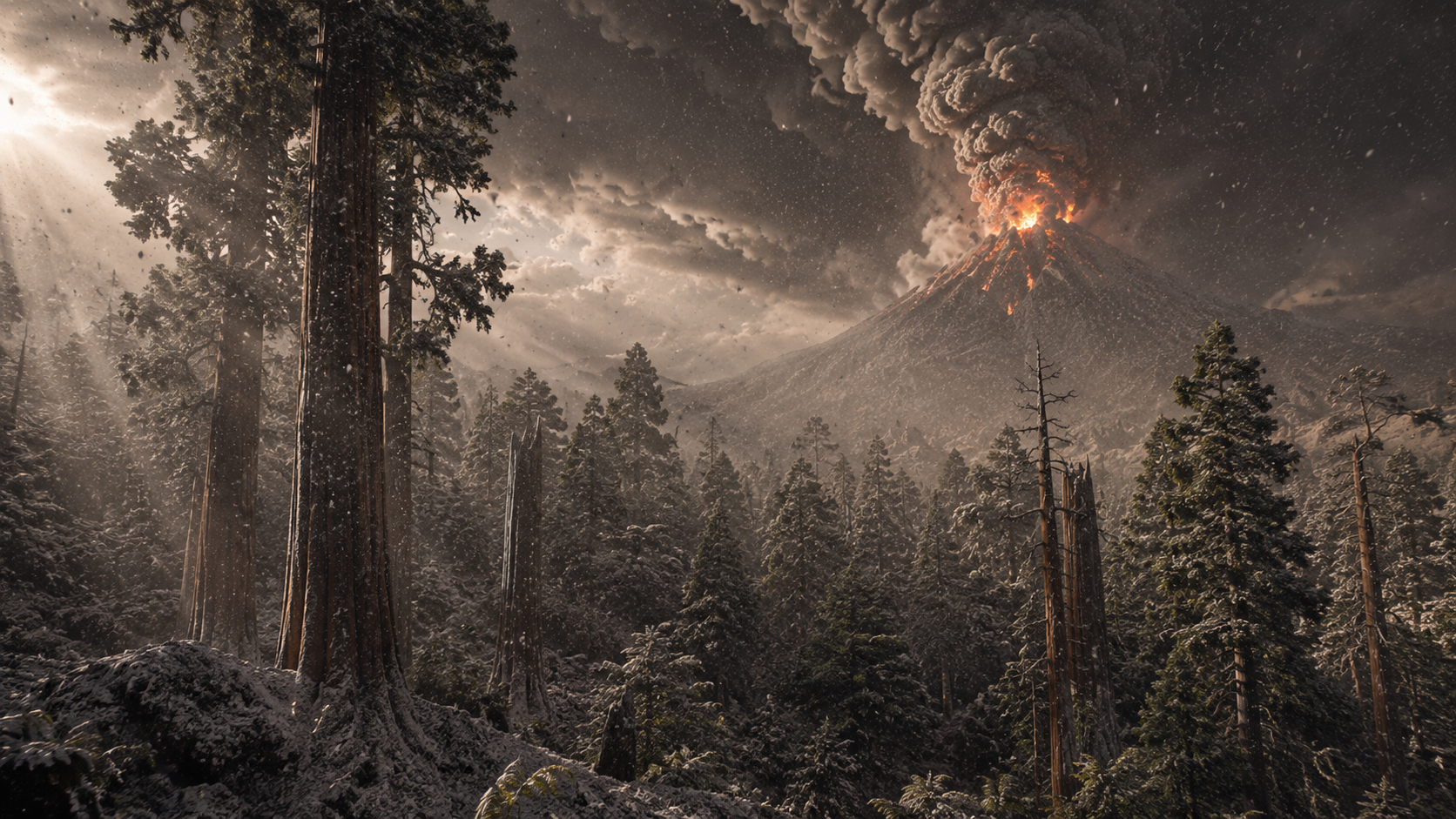
It forms when fallen trees are buried in sediment and mineral-rich groundwater slowly replaces the wood, cell by cell, with silica.
Petrified wood is a fossil in which the original organic material has been replaced by minerals — most often silica — while preserving the wood's cellular structure.
The great deposits of the American Southwest formed in the Late Triassic, roughly 210 million years ago, when forests were buried in volcanic-rich sediment.
Iron, manganese, and other trace minerals in the groundwater produced the reds, ambers, and golds now visible in each polished face.
The Object
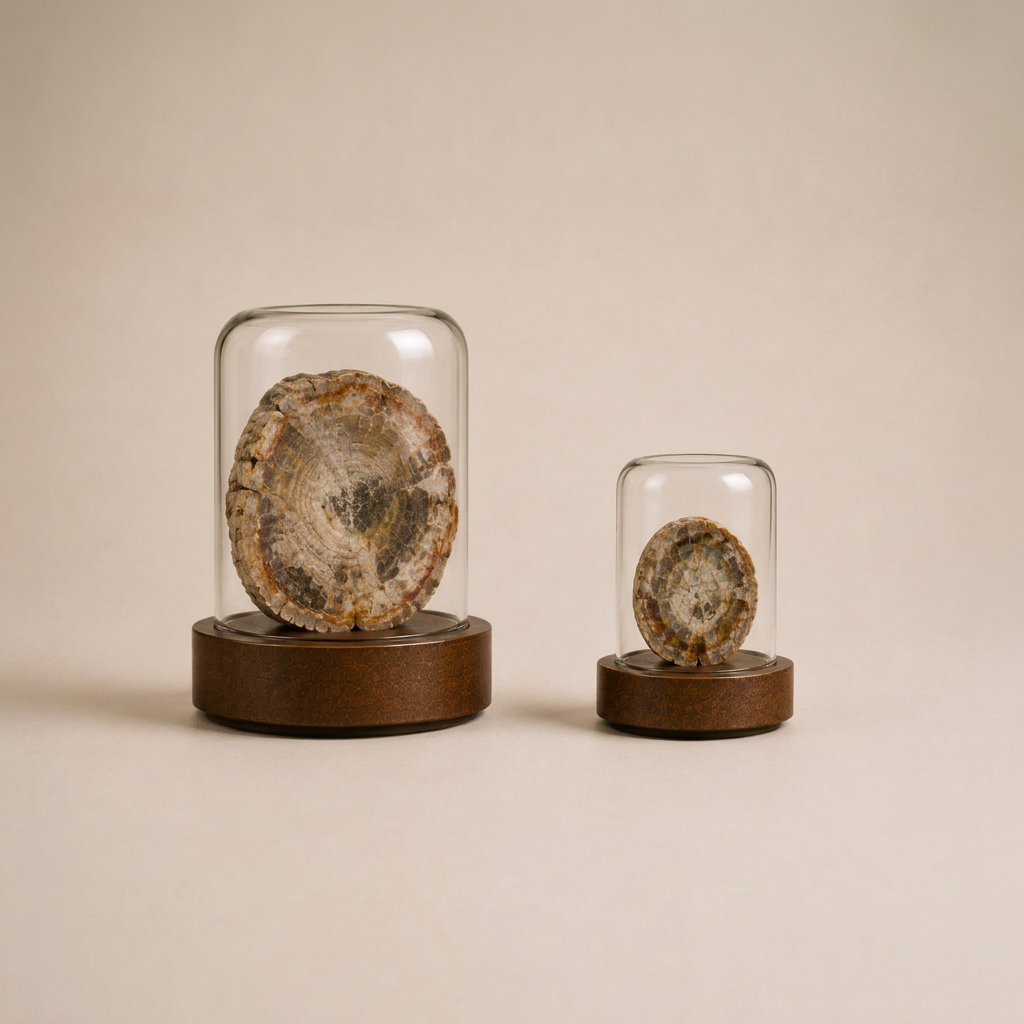
We choose upright pieces with clear ring structure, rich agatised colour, and a polish that reveals the grain. Bark edges are kept where they survive.
Closer In
Under magnification the original cell walls are still visible, faithfully rendered in mineral — a photograph of living tissue, taken in stone.
Packaging
Designed to be kept, not discarded.
- Museum-inspired specimen card
- Object provenance and formation notes
- Protective presentation materials
- Designed to be kept, not discarded
Previously Stewarded
This specimen, continued
Examples of Petrified Wood returned through Continue the Story and offered for a new steward, with records intact.
You may also notice
From the Journal